 Guide
 Case study
 Guide
Your prompts get old
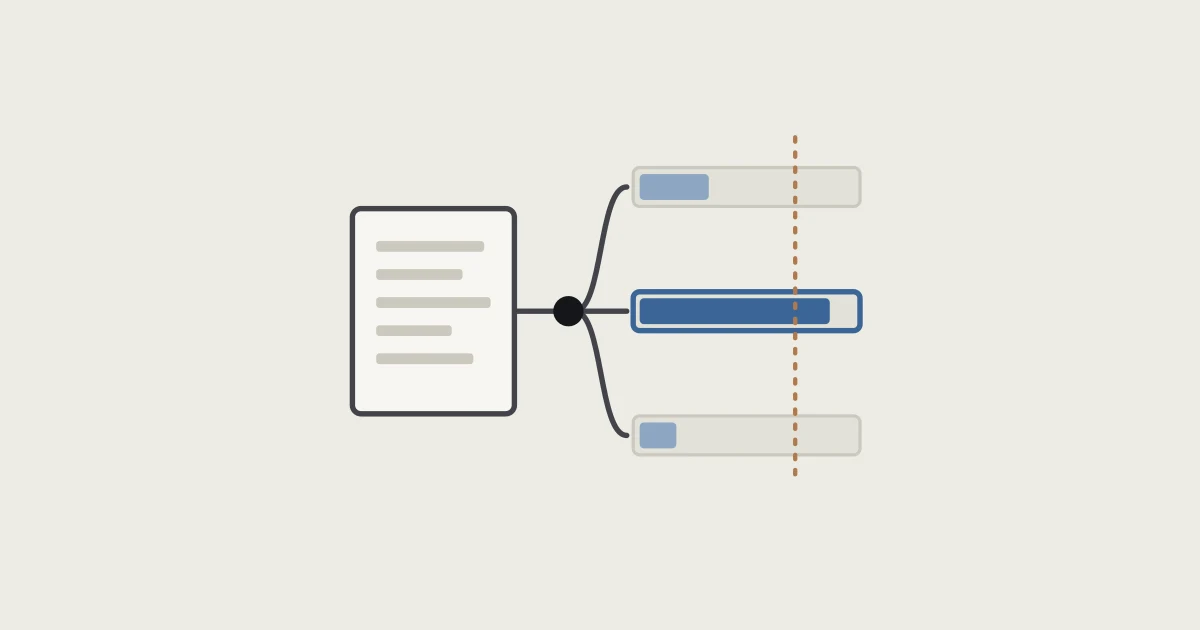
Each new model can change what works. Prompts and skills that helped last year can now be dead weight, or make results worse. Here is how to find out, case by case.
At a glance
- For
- Teams shipping prompts, skills or AI agents
- You need
- 20 to 50 real cases with the answer you expect, a script that runs two versions, and a way to score each answer
- Effort
- About an afternoon to collect the cases; usually minutes to re-run on each change
- Sources
- Four studies and one vendor's guidance, linked at the end
You wrote a careful prompt (the instructions you give the model). You added examples, maybe a skill: a packaged set of house rules the model loads when a task needs it. It worked. Then a new model came out, the model underneath was swapped, and nobody checked again.
Many teams work this way, and each model change is a new chance for something to break.
What worked can stop working
Some techniques that were standard two years ago now help less. In a Wharton study, asking the model to reason step by step added only about three points of accuracy on models that already reason on their own. It also made responses 20% to 80% slower.1
One benchmark found something similar for skills. In SkillsBench (a fixed set of test tasks), curated skills raised the average pass rate from 33.9% to 50.5%. But on 13 of the 87 tasks, results got worse with the skill. In the same benchmark, skills the model wrote for itself did worse on average than no skill at all.2
OpenAI gives similar advice. Its migration guidance says to compare results on representative tasks when you switch models, and to audit the skill files your model can read.3
The average hides things
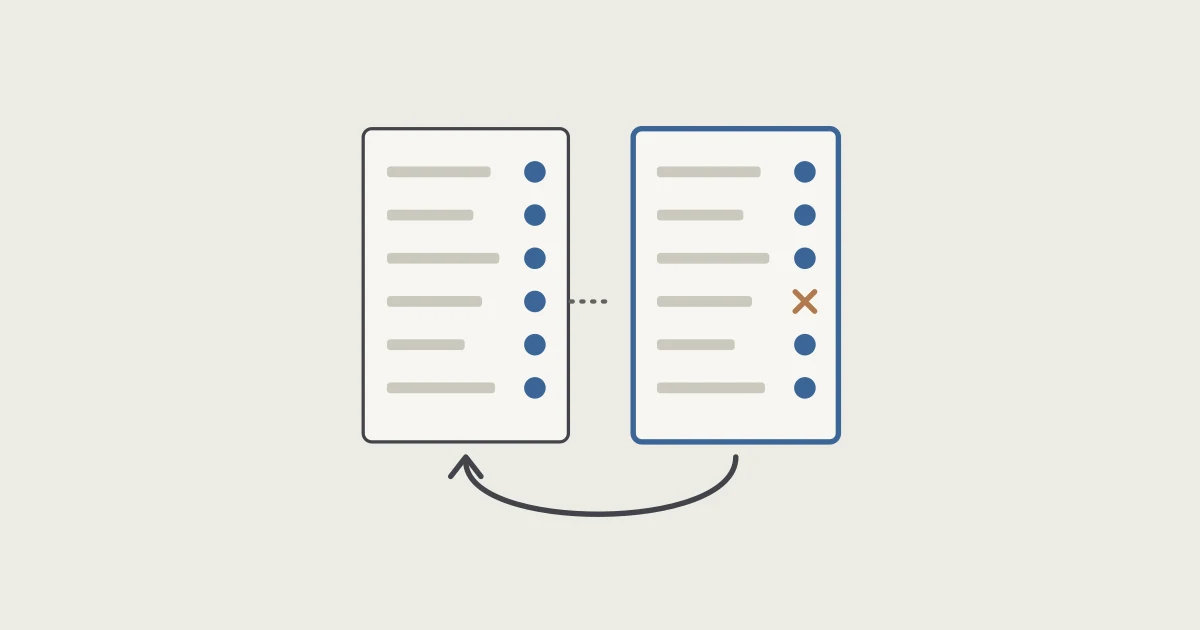
Even when a new model is better on average, some answers that were right can become wrong. Apple researchers call these negative flips.4 If you only look at the average, you don’t see them. Those regressions can reach your customers without anyone noticing.
So compare the results case by case, and look at the average only after that.
A harness in twenty lines
A test harness is the small program that runs your cases and records the results. You can build one with a file of cases and a loop, without a dedicated platform. In Python, the skeleton looks like this:
import json

cases = [json.loads(line) for line in open("cases.jsonl")]  # {"id", "input", "expected"}

def run(version, case):
    ...  # call your app with the model, prompt or skill of `version`; return its answer

def passes(case, answer):
    ...  # an exact check, a rubric, or a judge model from another family

rows = []
for case in cases:
    before = passes(case, run("current", case))
    after = passes(case, run("candidate", case))
    rows.append((case["id"], before, after))

broke = [r[0] for r in rows if r[1] and not r[2]]   # right before, wrong now
fixed = [r[0] for r in rows if not r[1] and r[2]]
print(f"{sum(r[2] for r in rows)}/{len(rows)} pass · {len(broke)} broke · {len(fixed)} fixed")
print("broke:", broke)
passes can use an exact check, a rubric (a written list of what a good answer must contain) or a judge model (a second model that grades the answer). Two details matter more than the code.
First, write the expected answer before you run anything, so the test can’t drift toward whatever the model says.
Second, if a model scores the answers, don’t let it judge its own family. In one 2026 study, 17 of 20 judge models measurably favoured their own answers.5 Check the judge against a few dozen of your own ratings before you trust it.
Sometimes it isn’t the model
When an agent fails, the first suspect is the model. Sometimes the problem is in the harness around it: the tools it can use, the context it receives, what it remembers between runs, how it decides it’s done. Switching models fixes none of that.
Your test harness can help you tell which it is. Run the candidate model with the current setup, then the current model with a changed setup. The change that affects the broken cases points to where the problem probably is.
Try this
Before you switch models, or add a skill, collect twenty to fifty real cases from your own work, each with the answer you consider right. Run them with and without the change. Compare the results case by case as well as on average. Keep what helps, cut what makes no difference, and repeat whenever the model changes.
If you don’t have time to set this up, it’s what we do in AI evaluation.
Sources
- Meincke et al., Wharton, 2025. arXiv:2506.07142
- SkillsBench, 2026. arXiv:2602.12670v4
- OpenAI, prompt guidance (accessed October 2026; the page changes with each model). developers.openai.com
- Apple, MUSCLE, 2024. arXiv:2407.09435
- Yang et al., 2026, self-preference in LLM judges. arXiv:2604.22891