 Guide
 Case study
 Guide
Five minutes to thirty seconds
Software for a Portuguese HVAC manufacturer, built one problem at a time: a label page that cut the time to make one from about five minutes to about thirty seconds, then a desktop ERP that started life on top of Excel.

At a glance
- Client
- A Portuguese HVAC manufacturer (kept anonymous)
- What we built
- A label-printing page (2020) and a desktop ERP for orders, stock, customers and quotes (2024 onwards)
- Stack
- Blazor WebAssembly on Cloudflare Pages · WPF on .NET 8 · PostgreSQL on Supabase with EF Core · EPPlus for Excel · Cloudflare R2 and Workers for updates · Sentry · GitHub Actions
- Timeline
- Labels: about four weeks from first commit to the version the factory used. ERP: first commit in August 2024, on PostgreSQL by December 2024, version 2.5 by mid-2026 (224 commits).
- Result
- A label in about thirty seconds instead of about five minutes
We have worked with a Portuguese HVAC (heating, ventilation and air conditioning) manufacturer, on and off, for years. There is no retainer. Each piece of software we built answered one problem the team had at the time. This is how two of those pieces were built, in the order they happened.
2020: the label
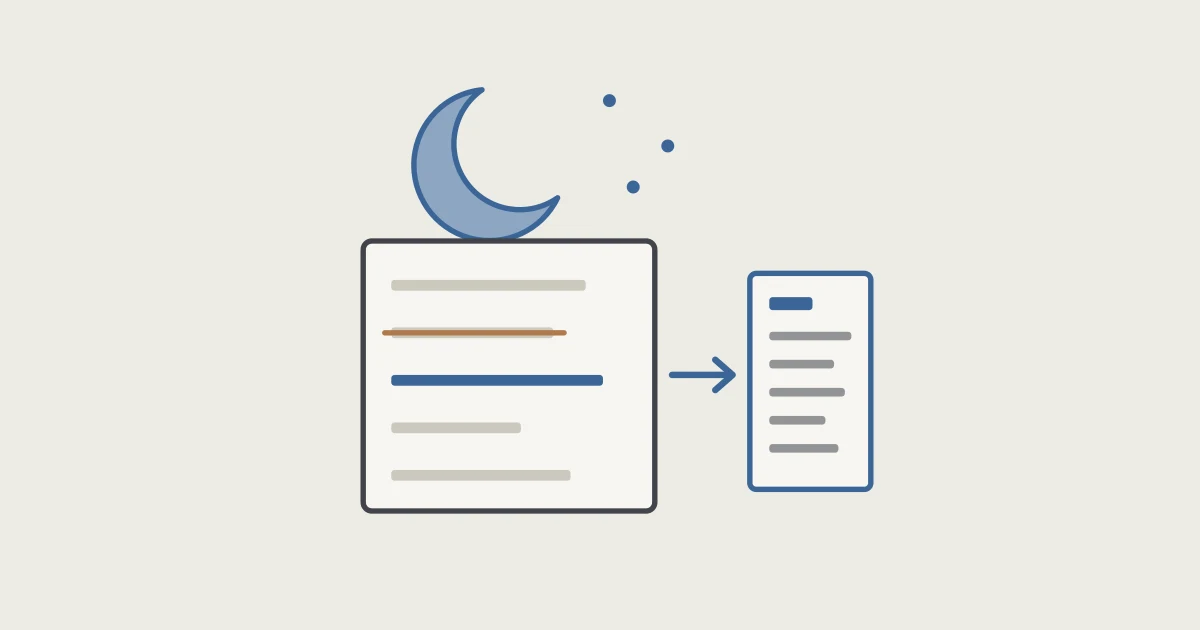
Every product leaves the factory with a label, in one of two sizes: 29 × 90 mm or 17 × 54 mm. Making one meant opening a template, typing the details in by hand, fixing the layout and sending it to the printer. Each label took about five minutes.
We built a single web page that knows both sizes. You fill in the product details, the page lays them out to the millimetre, and you print. A label now takes about thirty seconds.
The page runs entirely in the browser, with Blazor WebAssembly (C# code running inside a web page). So it is a static site, with no server to maintain, hosted on Cloudflare Pages.
From the first commit (the first saved change to the code) to the version the factory used took about four weeks. The page is still in use and still being tuned: in 2026 we enlarged the data rows on the 29 × 90 label.
2024: an ERP that started on Excel
An ERP is the software that runs a company’s daily operations in one place. Here, orders, stock, customers and quotes lived in spreadsheets. The obvious move was to replace them with a database on day one. We didn’t.
The first version of the desktop app (WPF on .NET 8, Microsoft’s toolkit for Windows apps) read and wrote the team’s existing Excel files. The team kept working the way it already did. We got time to learn which columns mattered and where the real rules lived.
About four months later, in December 2024, we started moving the data to PostgreSQL, hosted on Supabase (a managed database service). The stock spreadsheets followed in late 2025, carried across by a small migration tool. The app still exports to Excel, because the reports the team relies on are spreadsheets. In October 2025, label printing for orders moved inside the ERP too.
Updates nobody has to install
A desktop app has a classic problem: keeping every PC on the latest version. GitHub Actions builds and tests each release. It publishes each one as a single executable (one file that holds the whole app) to a private bucket on Cloudflare R2, Cloudflare’s file storage. A small Cloudflare Worker, code that runs on Cloudflare’s network, sits in front and checks an API key. The app checks for updates when it starts, shows the release notes and installs. If a release goes wrong, a rollback workflow puts the previous version back.
That pipeline arrived in stages: automatic updates in January 2025, private storage and rollback in October 2025. Errors go to Sentry, an error-tracking service. When the app crashes, the report reaches us with its details attached. Nobody has to describe the error to us over the phone.
What we took from this project
- Start where the team already is. Our first database was their spreadsheet.
- Fix the smallest painful thing first. The label page came four years before the ERP. We think it helped the team trust the ERP.
- Make updates boring. If a new version needs someone to visit every PC, the fix can take a long time to reach the floor.
In the client’s words: “Work is so much easier now. Less moving around, no friction.”
Try this
Pick the task your team repeats most and time it once, with a stopwatch. Then multiply by how often it happens in a year. If the number surprises you, that task may be a good place for software to start.